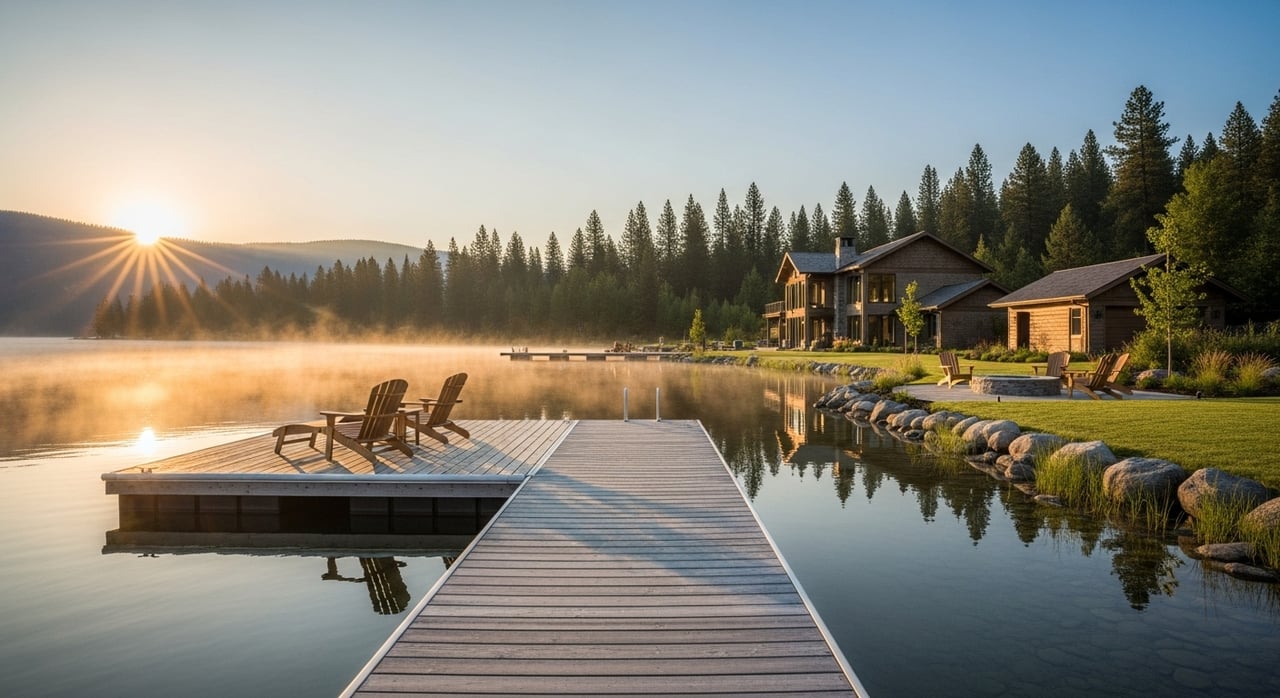
Key Waterfront Terms Coeur d'Alene Lake Buyers Need
December 4, 2025
December 4, 2025
Buying on Coeur d’Alene Lake comes with its own vocabulary. If words like littoral rights or OHWM make you pause, you’re not alone. Understanding these terms protects your plans, budget, and future dock use. In this guide, you’ll learn the essentials for Kootenai County lakefront and how to verify them during your purchase. Let’s dive in.
Littoral rights apply to land that touches a lake. You generally have reasonable access to and use of the water, and you may be able to build a dock with the right permits. These rights are not absolute. State rules, recorded easements, and approvals often limit what you can build and how you use the shoreline.
The Ordinary High Water Mark, or OHWM, is the line on the shore that shows where water usually reaches. It is identified by changes in vegetation, erosion lines, or debris. The OHWM often separates private upland from state-owned submerged land, and it is the reference point for many permits and setbacks. Structures that sit lakeward of the OHWM usually need state or federal approvals.
For navigable lakes in Idaho, the state typically holds title to submerged lands. On Coeur d’Alene Lake, that means you can own to the water’s edge, but you likely do not own the lakebed beyond the OHWM. Docks, pilings, or mooring buoys often require leases or permits to use that state-owned area.
Not all “waterfront” means the same thing. Always verify how access is created and what rights come with it.
Fee-simple to the OHWM: Your deeded parcel extends to the water’s ordinary high mark. The state usually controls the lakebed beyond that line.
Fee-simple to a different water line: Some deeds describe the boundary differently. A current survey helps confirm the exact boundary.
Shared or community frontage: Multiple owners share a beach, dock, or shoreline owned by an association or common lot.
Easement or right-of-way access: You have recorded access to the lake, but you may not own the shoreline and may not have exclusive dock rights.
Shorelines change over time. Accretion is a gradual gain of land, erosion is a gradual loss, and avulsion is a sudden change from events like storms. These changes affect usable land, setbacks, and sometimes title clarity. If you plan shoreline armoring or alterations, expect permits and environmental review.
Setbacks are required distances from the OHWM, property lines, or other features. They limit where you can place homes, additions, garages, septic systems, and hardscape near the lake. In Kootenai County and the City of Coeur d’Alene, local planning and building departments set these rules. The Panhandle Health District regulates onsite septic systems and their setbacks.
Expect involvement from multiple agencies for docks, pilings, seasonal floats, or mooring buoys.
Idaho Department of Lands (IDL): Administers leases and permits for structures on state-owned beds of navigable lakes.
U.S. Army Corps of Engineers (USACE): May require federal permits for structures or fills in navigable waters and wetlands.
Kootenai County or City of Coeur d’Alene: Local shoreline, zoning, and building permits.
Panhandle Health District: Reviews septic and wastewater considerations that can be affected by shoreline work.
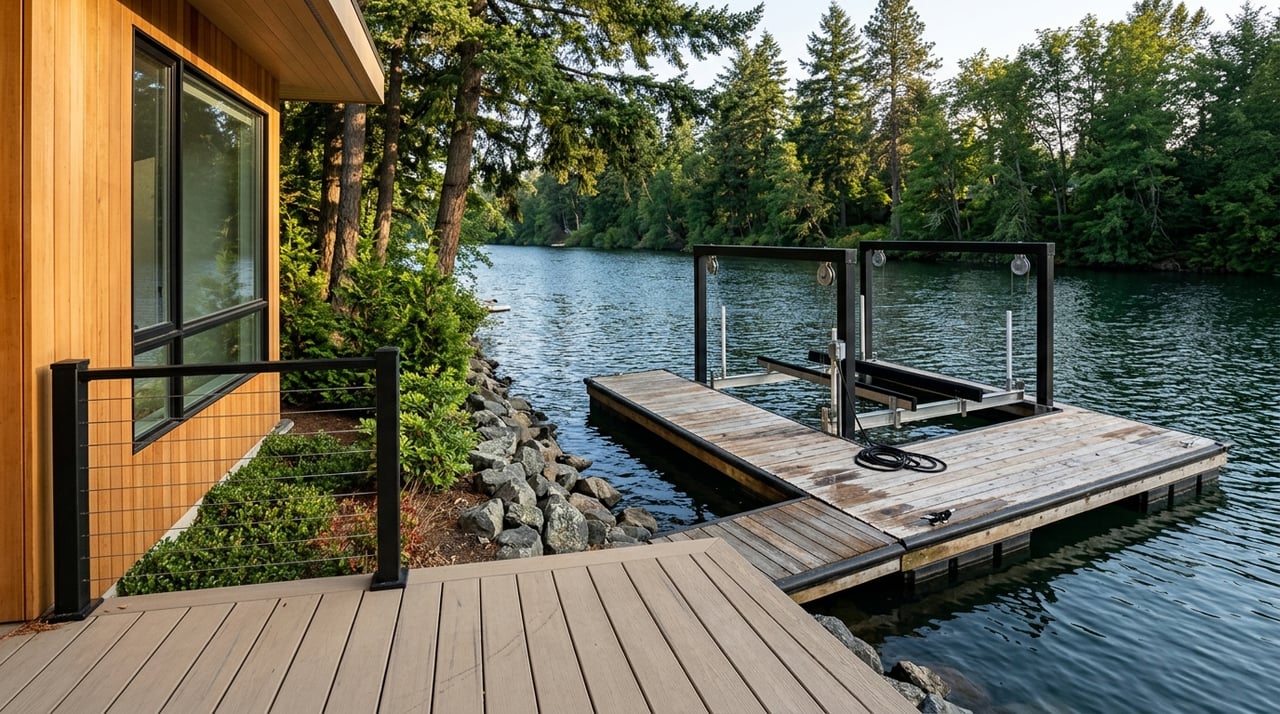
Floating docks often involve simpler, seasonal authorizations, but they still need notice or permits. Pile-supported or permanent piers usually require more detailed approvals. Standards often address overall footprint, length, number of slips, setbacks from property lines, and navigation safety. Some authorizations are leases with expiration dates, and not all are transferable to a new owner.
Unpermitted or expired docks surface during sales and can delay closing. Shared docks need clear agreements on use, costs, and maintenance. Littoral rights do not guarantee a right to block a neighbor’s view or control navigation within lawful limits.
Navigability and state bed ownership: The lake is navigable, so the state generally owns submerged lands. IDL is the first stop to confirm adjacent lakebed status and any leases.
Public access and safety zones: There are public boat ramps and navigational channels, and some areas may have no-wake zones.
Seasonal water levels: Lake levels shift with inflows and outflows. Dock lengths and usability can change through the season.
Legacy docks: Many older docks were built under different rules. Ask for copies of permits, leases, and any past approvals.
Tribal considerations: Confirm whether any tribal interests or cultural resource considerations apply near your area of the lake.
Use this quick list as you tour properties and plan next steps.
Get the recorded deed and referenced plats. Look for boundary language, reservations, or easements.
Order a current survey that marks the OHWM, shoreline features, and any lake access.
Request all dock, seawall, and shoreline permits, plus any leases or approvals.
Contact IDL to confirm submerged land ownership and any existing dock or buoy authorizations.
Check with Kootenai County or the City of Coeur d’Alene on shoreline setbacks, zoning, and building permits.
Ask USACE whether federal permits apply to planned work.
Consult Panhandle Health District for septic locations, setbacks, and upgrade needs.
Have a shoreline surveyor or engineer identify the OHWM, erosion risk, and dock feasibility.
Inspect dock condition and anchoring. Estimate repair or replacement costs.
Ask about invasive aquatic plants or weeds and typical management in the area.
Confirm if any dock lease is transferable, expired, or in arrears.
Review tax treatment and any assessment related to the waterfront.
Check for past or pending enforcement actions.
Verify public access points, navigation channels, and any HOA or community rules.
Ask about typical water depth, winter ice, and seasonal patterns affecting moorage.
Does the deed extend to the waterline, or is access by easement only?
Where is the OHWM on this parcel, and is a new survey recommended?
Who manages the submerged land adjacent to the property? Is there an IDL lease or permit for the dock or buoy?
Is the existing dock permitted, and can any lease transfer to a new owner?
What are the local setbacks for the house, additions, and septic systems relative to the OHWM?
Has the shoreline been armored or altered, and were permits obtained?
Are there HOA covenants or shared-dock agreements that define slip rights and maintenance?
Has the property experienced erosion, flooding, or sudden shoreline changes?
What are the seasonal water levels and their effect on dock length and boat access?
Are there tribal or public-access considerations near this parcel?
Are there any unresolved permit or enforcement issues?
Assuming “waterfront” means full control of the shoreline or lakebed.
Relying on old or verbal claims about dock rights or transfers.
Skipping the OHWM survey and buying based on marketing maps.
Underestimating dock wear from seasonal level changes and winter conditions.
Require a current, OHWM-based survey in your offer.
Make seller warranties about permits, leases, and compliance part of your contract.
Consult a shoreline or marine engineer for dock feasibility and costs before closing.
Speak with IDL and local planning early to understand timelines and requirements.
Use a real estate attorney experienced in Idaho water law for title and permit review.
If you want a clear path from first showing to launch day, you need a team that lives these details. Our boutique approach pairs local authority with discreet, concierge service to protect your time and value. When you are ready to move from terms to tours, connect with Corcoran-Hall & Co. for a private consultation.
Stay up to date on the latest real estate trends.
Work with them for high-touch real estate service in North Idaho. Their local market mastery, proven results, and client-first approach deliver seamless, strategic transactions.