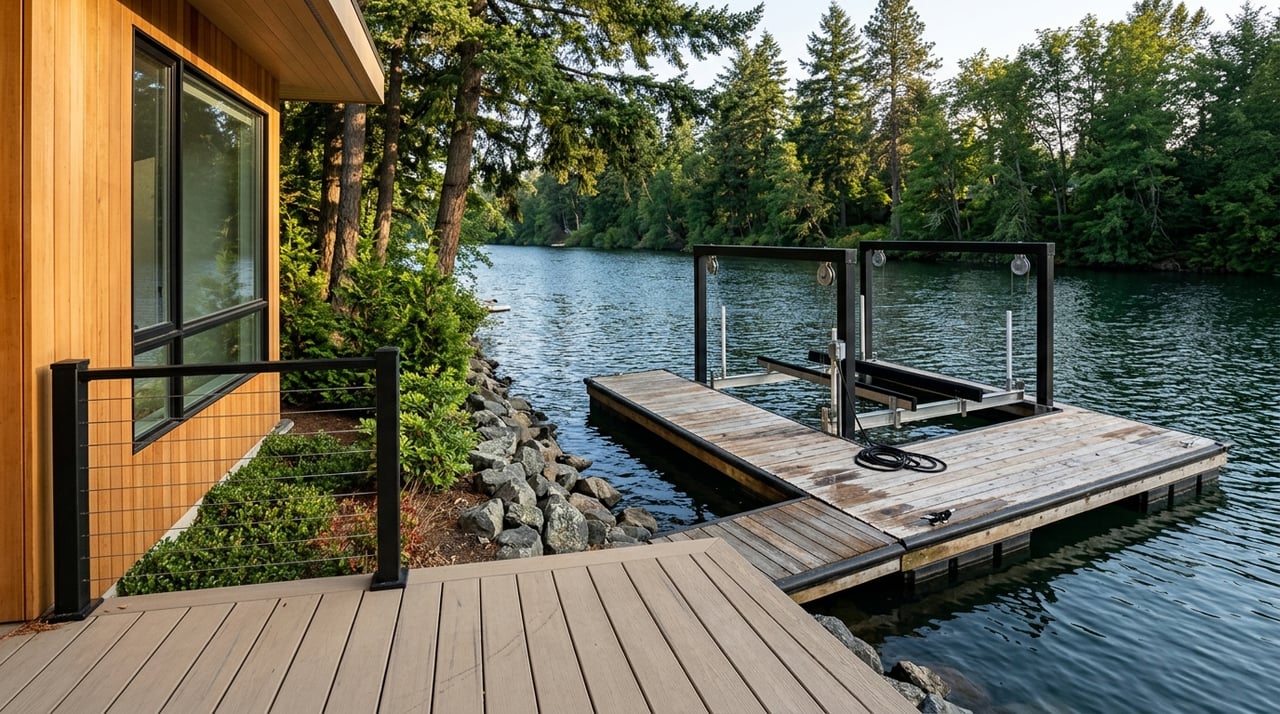
Boater’s Guide To Living On The Spokane River
May 7, 2026
May 7, 2026
Picture this: you step out to your dock, coffee in hand, and the river looks calm, glassy, and ready for a quick cruise. Then later that same day, water levels shift, current picks up, and the stretch that felt easy in the morning behaves very differently. If you are considering life on the Spokane River in Post Falls, that contrast matters. This guide will help you understand what boating here is really like, what daily access looks like, and what to check before you buy or sell a riverfront property. Let’s dive in.
Living on the Spokane River offers a different boating experience than living directly on a still-water lake. The Spokane River is the only surficial outlet of Coeur d’Alene Lake, and it runs about 15 miles in Idaho before crossing into Washington.
Near Post Falls, the river is shaped by Post Falls Dam operations. That means water levels and current can change with the season and with release patterns, so day-to-day boating conditions are not always as predictable as they might seem from the shoreline.
For homeowners, that creates a lifestyle that is both scenic and active. Some stretches feel ideal for relaxed cruising and marina-based boating, while other stretches are more current-driven and better suited to paddling or smaller craft.
Near Lake Coeur d’Alene, Q’emiln Park, Marina 33, and River’s Edge Marina, the river tends to feel more like launch-and-go boating water. You will see a mix of slips, fuel access, swimmers, and short cruises that fit well into a summer afternoon.
This part of the river often supports the lifestyle many buyers picture when they think about waterfront living. It is convenient, social, and closely tied to marina amenities and seasonal recreation.
Ross Point has a quieter day-use feel. The emphasis here is more on swimming, paddleboards, kayaks, and dock access rather than trailer launching.
That makes it appealing if you enjoy lower-key time on the water. It is less about high-traffic boating and more about simple access for a paddle or a swim.
Below the more protected boating areas, the river becomes more current-driven. From Corbin Park to the Stateline, the route is about 4 miles and includes minor Class I rapids.
This stretch is generally better suited to paddlers and small craft users who know the river or who wait for lower-risk flow conditions. If you are shopping for a home based on boating access, this distinction is important because not every stretch supports the same kind of use.
One of the biggest realities of living on the Spokane River is that public shoreline access is limited. That is why official launch sites and day-use access points play such an important role in how owners and guests use the river.
Q’emiln Park is one of the best-known city launch points in Post Falls. It sits at the south end of the Spokane Street Bridge and includes a boat launch and a guarded swimming beach.
The launch season can vary from year to year. The city notes that opening dates depend on water levels, weather, dam impacts, and public safety, and the launch is typically closed by mid-November and reopened in late spring or early summer.
Greensferry Boat Launch is a county launch at 11253 W Riverview Drive. It includes a launch ramp, boat dock, and limited trailer parking.
Kootenai County lists it as a fee-required launch. The site is also closed from 10 p.m. to 5 a.m., which is useful to know if you are planning early or late boating days.
Ross Point is a valuable access point because it provides public access along a section of river where much of the shoreline is privately held. The site includes a floating dock, a designated swim area, and room for kayaking and paddleboarding.
It does come with limitations. Parking is restricted to 12 single-vehicle spaces, and the site cannot accommodate trailers, RVs, or buses.
Just north of Post Falls, Blackwell Island expands your practical boating options. It provides access to both Lake Coeur d’Alene and the Spokane River.
This site has 130 trailer spaces, 34 single-vehicle spaces, and four accessible launch lanes. Its operating season is typically from just before Memorial Day Weekend to mid-October because fluctuating river water levels affect access.
If you want a boating lifestyle with more convenience, marina support can be a major advantage. In Post Falls, two prominent marinas help make that possible.
Marina 33 offers slips and marina services on the Spokane River. It also provides 24/7 self-serve fuel, premium fuel, power and water hookups, a private beach, and food and beverage service.
For homeowners who may not want to rely solely on private shoreline improvements, that kind of support can make day-to-day boating much easier. It adds flexibility, especially during the main recreation season.
River’s Edge Marina reports 142 slips along with seasonal moorage, fuel service, shore power, storage lockers, and a convenience store. It is also positioned as a base for quick access to Lake Coeur d’Alene.
That matters if your boating plans include both river cruising and lake outings. A home near the river can offer strong lifestyle value when it is paired with practical marina access nearby.
The Spokane River is best understood as a managed boating corridor. If you live here, the rules around speed, wake, and restricted areas are not background details. They directly affect how you use your property and protect the shoreline around you.
Kootenai County sets specific boating rules for the Spokane River from the headwater to Post Falls Dam. On that stretch, the daytime speed limit is 35 mph and the nighttime speed limit is 25 mph.
There are also lower-speed buffer zones that matter for waterfront owners. Within 100 feet of a shoreline, dock, pier, structure, or person in the water, the limit is 5 mph with no wake. Within 50 feet of another vessel, the limit is 15 mph.
The county also prohibits excessive, dangerous, or damaging wake. Its definition includes plowing, artificially bow-high operation that enhances wake, or any wake that causes water to lap onto a dock or pier.
That is especially relevant if you are buying a home with a dock, lift, or other shoreline feature. These rules are designed to support safer boating while also protecting docks and shoreline improvements from unnecessary wear.
Kootenai County lists a no-waterskiing zone on the Spokane River between the 100-foot no-wake zone and 150 feet from shorelines or structures. The county also identifies a no-wake segment from the east end of Templin’s Marina to the Post Falls Dam.
If you are comparing homes in different sections of the river, these details can influence how you actually use the water in front of your property. A beautiful shoreline setting does not always mean the same boating freedoms from one address to the next.
The Post Falls dam area includes restricted-access zones when warning signs are posted. County rules prohibit entry into certain parts of the Spokane River within the City of Post Falls, or from land west of Spokane Street Bridge, when posted signs indicate closure.
These restrictions exist for safety around the dam. For boaters, it is a reminder that river conditions and access are shaped by infrastructure as much as by weather.
A riverfront home can absolutely be boat-friendly, but it is smart to look beyond the view. On the Spokane River, shoreline use, dock structures, and launch patterns all deserve a closer look during your home search.
Kootenai County’s shoreline management area extends 25 feet landward from the ordinary high-water mark of the Spokane River. That means work near the waterline is not simply a landscaping decision.
Idaho Department of Lands states that docks, marinas, shoreline stabilization, boat ramps, and similar structures on navigable waters are encroachments that require state review. For free-flowing rivers, dock permits are handled through the Idaho Department of Water Resources Stream Channel Protection Program.
If a property already has an encroachment such as a dock or lift, buyers and sellers should check whether assignment paperwork is needed. Idaho Department of Lands notes that lakefront property transfers involving existing encroachments may require a request-for-assignment form and fee.
On the Spokane River, that can be a meaningful part of due diligence. You want to know not just what is there, but whether it has been properly reviewed and whether transfer steps are still needed.
Not every waterfront buyer uses the river the same way. Some want quick access to a marina and short evening cruises, while others care more about paddling, fishing, or the ability to keep a small craft close at hand.
As you compare properties, think about the boating experience you actually want. On this river, location, current, launch access, and shoreline rules can matter just as much as the home itself.
For the right buyer, Spokane River living offers a unique blend of movement, scenery, and convenience. You are close to Post Falls amenities, connected to Lake Coeur d’Alene, and surrounded by a waterfront setting that feels active rather than static.
At the same time, this is not a free-for-all boating environment. The best experience comes from understanding the river’s managed nature, respecting wake and safety rules, and choosing a property that fits your preferred use of the water.
If you are buying or selling along the Spokane River, that local knowledge can make a real difference. A home may look ideal online, but the details that shape daily life often come down to launch season, marina access, dock permissions, and how the water behaves in that specific stretch.
When you want a clearer picture of what riverfront ownership really looks like in Post Falls, Corcoran-Hall & Co can help you evaluate both the property and the lifestyle with a local, high-touch approach.
Stay up to date on the latest real estate trends.
Work with them for high-touch real estate service in North Idaho. Their local market mastery, proven results, and client-first approach deliver seamless, strategic transactions.