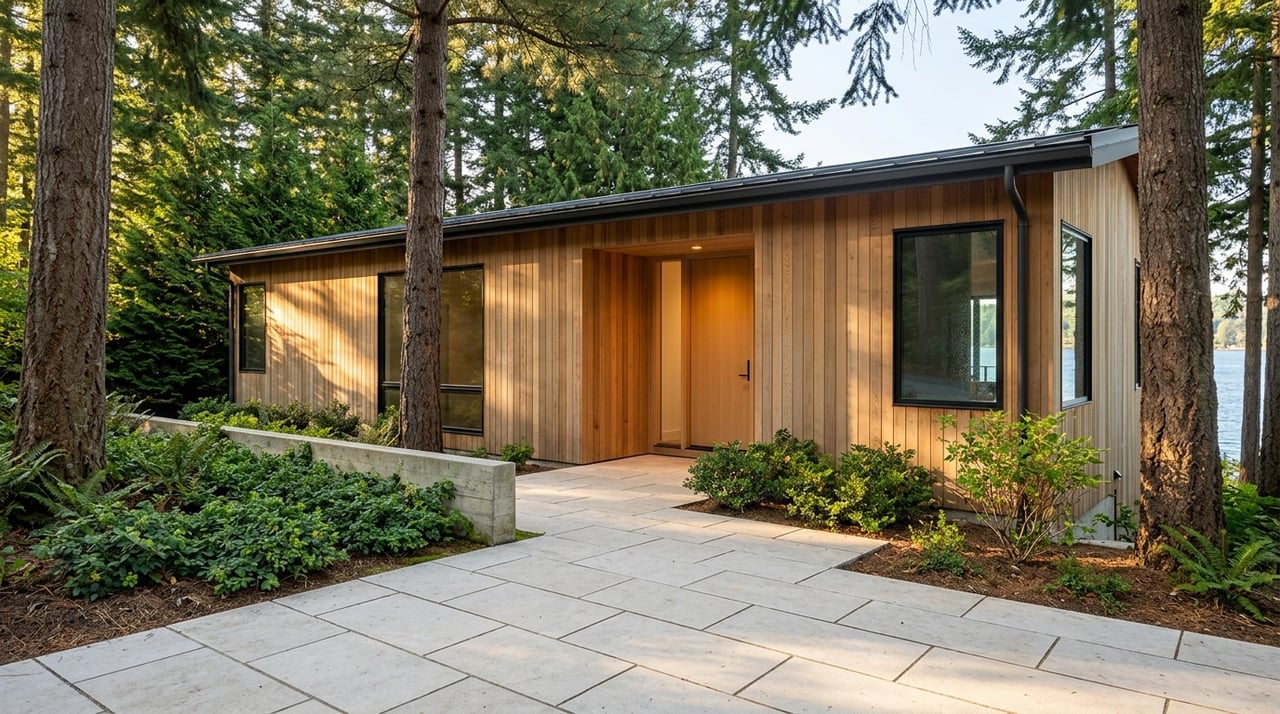
Quiet Corners Of Coeur d'Alene Lake For Retreat Homes
May 14, 2026
May 14, 2026
If you picture Lake Coeur d’Alene as one big waterfront destination, you might miss its most peaceful side. Some parts of the lake feel active and access-rich, while others feel more tucked away, forested, and better suited to a true retreat-home lifestyle. If you are searching in and around Coeur d’Alene’s 83814 area, this guide will help you understand which quiet corners of the lake may fit your goals and why. Let’s dive in.
On a lake as popular as Coeur d’Alene, quiet is relative. The Idaho Department of Environmental Quality describes the lake as a major recreational destination and an economic catalyst for the region, so even calmer areas can still see boating, paddling, campground use, and seasonal activity.
That said, some shoreline stretches naturally feel slower-paced than others. In general, areas with more natural buffers, fewer road connections, conservation land nearby, or boat-first access tend to read as more retreat-like than the north shore near the city.
The contrast matters if you are buying for privacy, rest, and a softer day-to-day rhythm. The north shore has some of the lake’s most convenient public access points, including Coeur d’Alene Parkway State Park and Blackwell Island Recreation Site, so distance from those hubs often changes how a property feels.
A retreat setting usually comes down to access, landscape, and surrounding use. On Lake Coeur d’Alene, the quietest-feeling areas are often the ones where nature still leads the experience.
Here are a few factors that shape that feeling:
If your goal is a second home or retreat property, these patterns can help you narrow your search. Rather than looking for one universally “best” bay, it is often smarter to match the setting to the kind of escape you want.
Cougar Bay is one of the strongest examples of a calm-feeling area close to Coeur d’Alene. The Bureau of Land Management describes the west side of this part of the lake as mostly undeveloped, with wildlife habitat, wetlands, and conifer forest.
That makes Cougar Bay appealing if you want a nature-first atmosphere without giving up proximity to town. It sits only a short distance southwest of Coeur d’Alene, so it can feel secluded in character while still keeping everyday services within easy reach.
The adjacent John C. Pointner Memorial Wildlife Sanctuary Trail adds to that preserve-like setting. For a retreat-home buyer, the key draw is not isolation for isolation’s sake, but the combination of access and a softer, less built-up shoreline environment.
Mica Bay stands out for buyers who want the lake to shape daily life. The BLM describes it as a boat-in campground with no public vehicle access, about seven miles south of Coeur d’Alene by boat.
That access pattern is a big part of its appeal. When an area is reached by water rather than public road traffic, it often feels more removed from the day-trip energy found around major launch areas.
Mica Bay also includes mooring docks, a beach, picnic facilities, and camping. For you as a buyer, that paints a clear picture of a boat-centered environment where the shoreline experience is tied more closely to the lake itself than to nearby road circulation.
If you want an even stronger sense of separation, Windy Bay deserves attention. The BLM describes it as a developed campground on the west side of the lake, 16 miles south of Coeur d’Alene, with no vehicle access.
That does not mean absolute silence, and it should not be framed that way. But compared with more access-rich areas, a boat-only stretch this far south naturally supports a more private and retreat-oriented feel.
For many second-home buyers, this is the kind of setting that helps a property feel like a true getaway. It is less about being disconnected from everything and more about being buffered from the busier rhythm of the north end.
Blue Creek Bay offers a different kind of quiet. Rather than boat-only isolation, it sits within the 736-acre Wallace Forest Conservation Area, according to the BLM, with forested uplands and a wetland-riparian setting.
That conservation backdrop matters. It gives the area a natural shoreline feel that can appeal to buyers who want calm surroundings and outdoor access without needing the full remoteness of a boat-only location.
Blue Creek Bay also includes small-craft boat access and trail access. If your ideal retreat means being close to forest, water, and low-key recreation, this type of setting may strike the right balance.
Bell Bay is another shoreline stretch that reads as retreat-like, especially for buyers drawn to a more classic North Idaho atmosphere. The U.S. Forest Service describes it as being on the southeast shores of Lake Coeur d’Alene, just north of Harrison, and surrounded by ponderosa and mixed pines.
That forest setting shapes the experience. Even without wilderness-level remoteness, pine cover and a less urban waterfront context can make an area feel more sheltered and visually calm.
Bell Bay is a good example of a place that feels tucked away rather than isolated. For some buyers, that is exactly the right fit for a lake retreat that still feels approachable.
Carlin Bay is useful to consider if you are looking beyond the lake’s busier urban edge but do not necessarily want a fully secluded setting. In an Idaho Department of Lands order related to marina permitting, Carlin Bay is described as about nine air miles south of Coeur d’Alene on the east side of the lake.
The same order notes testimony that it was one of the few public facilities between Coeur d’Alene and Rockford/Harrison. That suggests a more spaced-out shoreline pattern than what you see along the north end.
Carlin Bay is best understood as less urban, not fully private. It can suit buyers who want a calmer setting with some services and boating infrastructure still in the mix.
Beauty Bay often comes up in conversations about peaceful lake scenery, and for good reason. The BLM describes it as a small picnic area with a viewing deck and scenic trails.
Still, it is better viewed as a scenic public-use area than as proof of residential seclusion. It does not allow overnight camping, and its role is more about outlook and ambience than private retreat-style living.
That distinction is helpful when you are evaluating nearby real estate. A beautiful setting can absolutely support a retreat-home feel, but scenery alone does not tell you how private or low-traffic a specific property will be.
The best quiet corner for you depends on how you want to use the home. Some buyers want the strongest possible separation from road traffic, while others want a peaceful setting that still feels easy to reach from Coeur d’Alene.
A simple way to think about it is this:
This kind of lifestyle matching is often more useful than focusing only on distance from town. A home can be close in and still feel buffered, or farther out and still have noticeable public activity nearby.
When you buy a retreat property on Lake Coeur d’Alene, shoreline expectations should always be confirmed parcel by parcel. Privacy, dock potential, and shoreline improvements are not things you should assume from a map or a bay name.
That is especially important on the southern half of the lake, where the Idaho DEQ notes the Coeur d’Alene Reservation lies around the lake’s southern portion. The Coeur d’Alene Tribe states that structures and other encroachments on tribal waters and submerged lands within the Reservation Boundary must be permitted through its shoreline protection program.
For you as a buyer, this means due diligence matters. If a dock, shoreline feature, or future improvement is important to your plans, it should be verified locally before you move forward.
Lake Coeur d’Alene is not a one-note waterfront market. One bay may appeal for boat access and privacy, while another may stand out for forest cover, protected land nearby, or a more balanced mix of quiet and convenience.
That is why local interpretation matters just as much as property data. When you are evaluating a retreat home, you are really evaluating pace, setting, access, and how the property fits the lifestyle you want to create.
If you are considering a lake retreat near Coeur d’Alene, the right guidance can help you compare these shoreline environments with more clarity and confidence. For a private consultation on lakefront, lifestyle, and retreat-home opportunities, connect with Corcoran-Hall & Co.
Stay up to date on the latest real estate trends.
Work with them for high-touch real estate service in North Idaho. Their local market mastery, proven results, and client-first approach deliver seamless, strategic transactions.